Problem Space — New Value Proposition
This was an exploration and future-envisioning project: starting from market opportunity and consumer trends, defining a new value proposition, and building a blueprint solution to bring it to market as a category leader.
From design and market research, our Planning & Design team noticed the rapid growth in imaging innovation and picture-sharing applications — both emerging web services and social trends pointed to significant market potential. Sony had a well-recognized position in the imaging market; the opportunity was to leverage that and create new experiences that could form a genuine innovation force in the space.
Project Outcome
I led the end-to-end discovery and design journey — from initial research through multiple ideation phases, stakeholder engagement, wireframing, and final visual and content ecosystem design. The work was planned holistically and executed in stages:
Phase II — Open a public API, receive external developer contributions, and build a content ecosystem that keeps users active and drives consumption through the Sony online store.
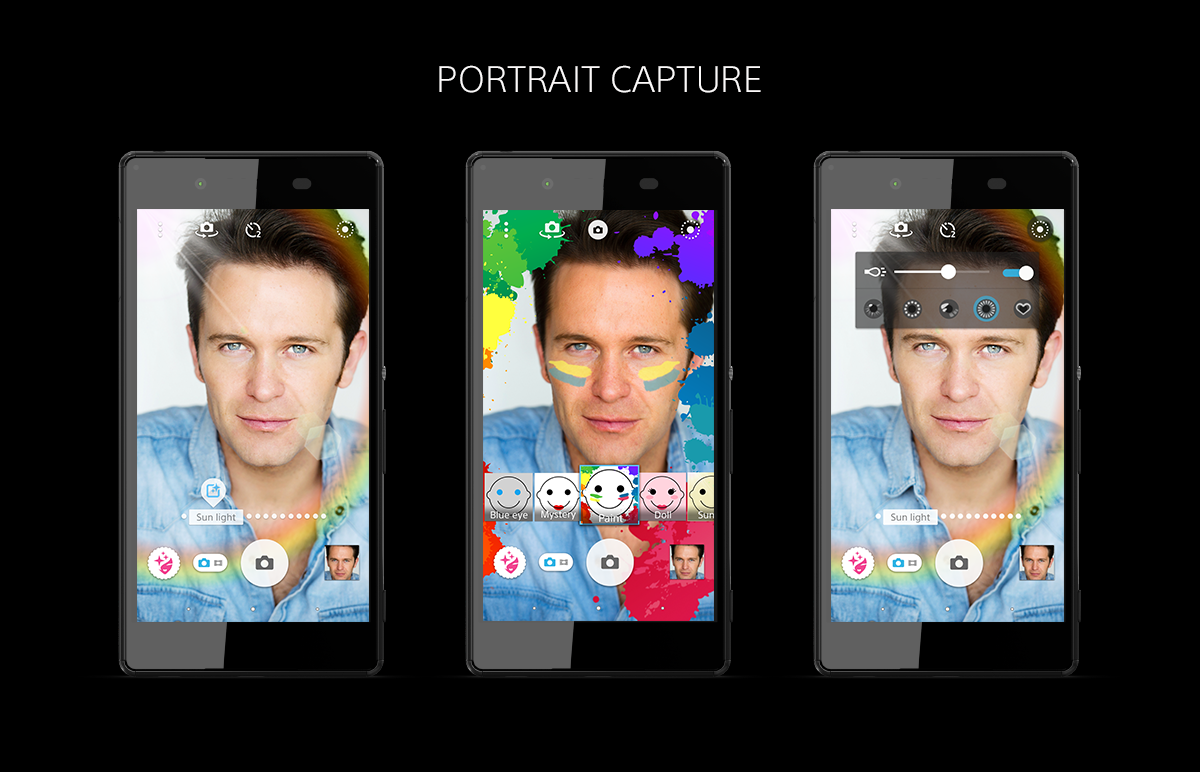
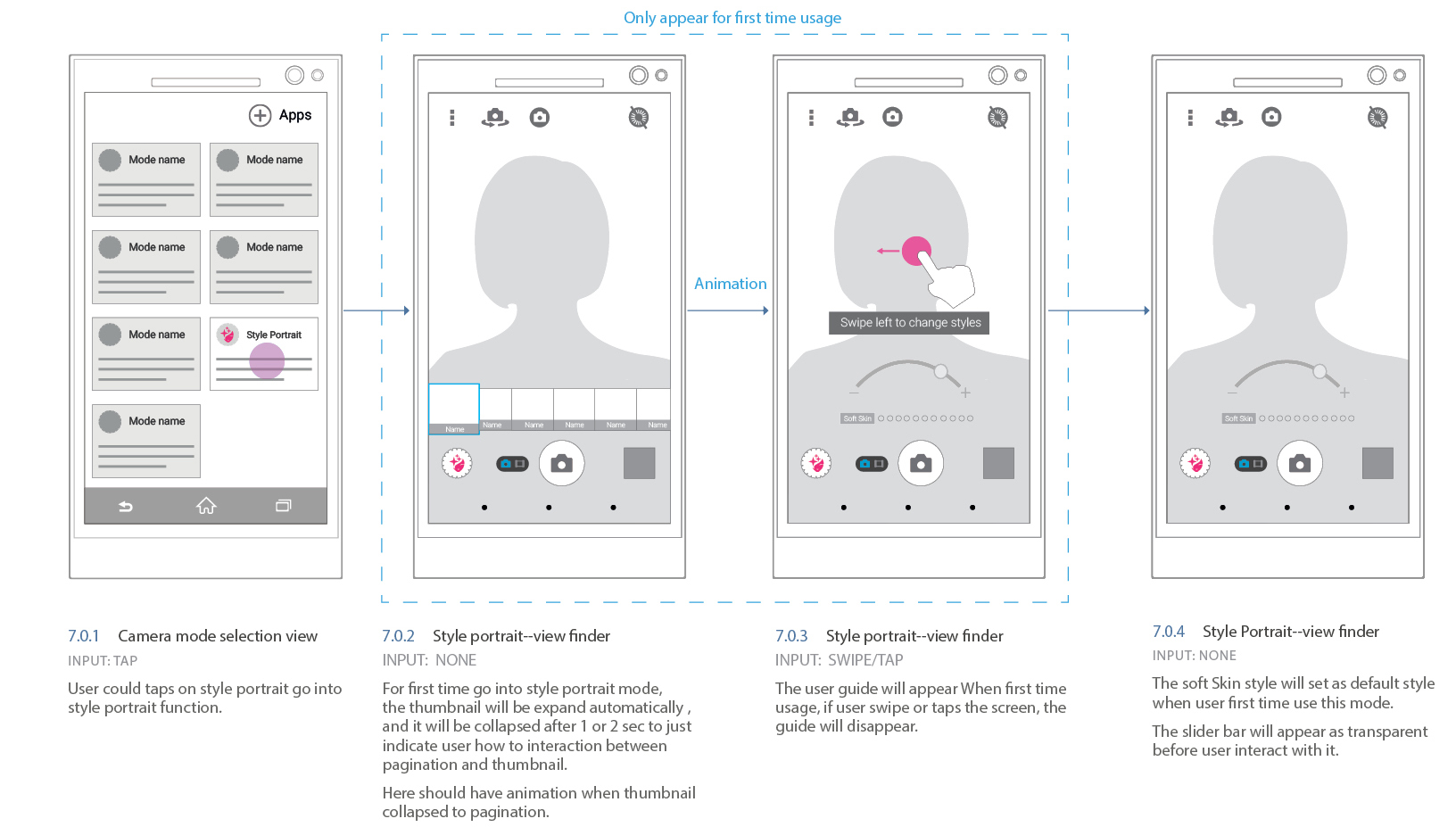
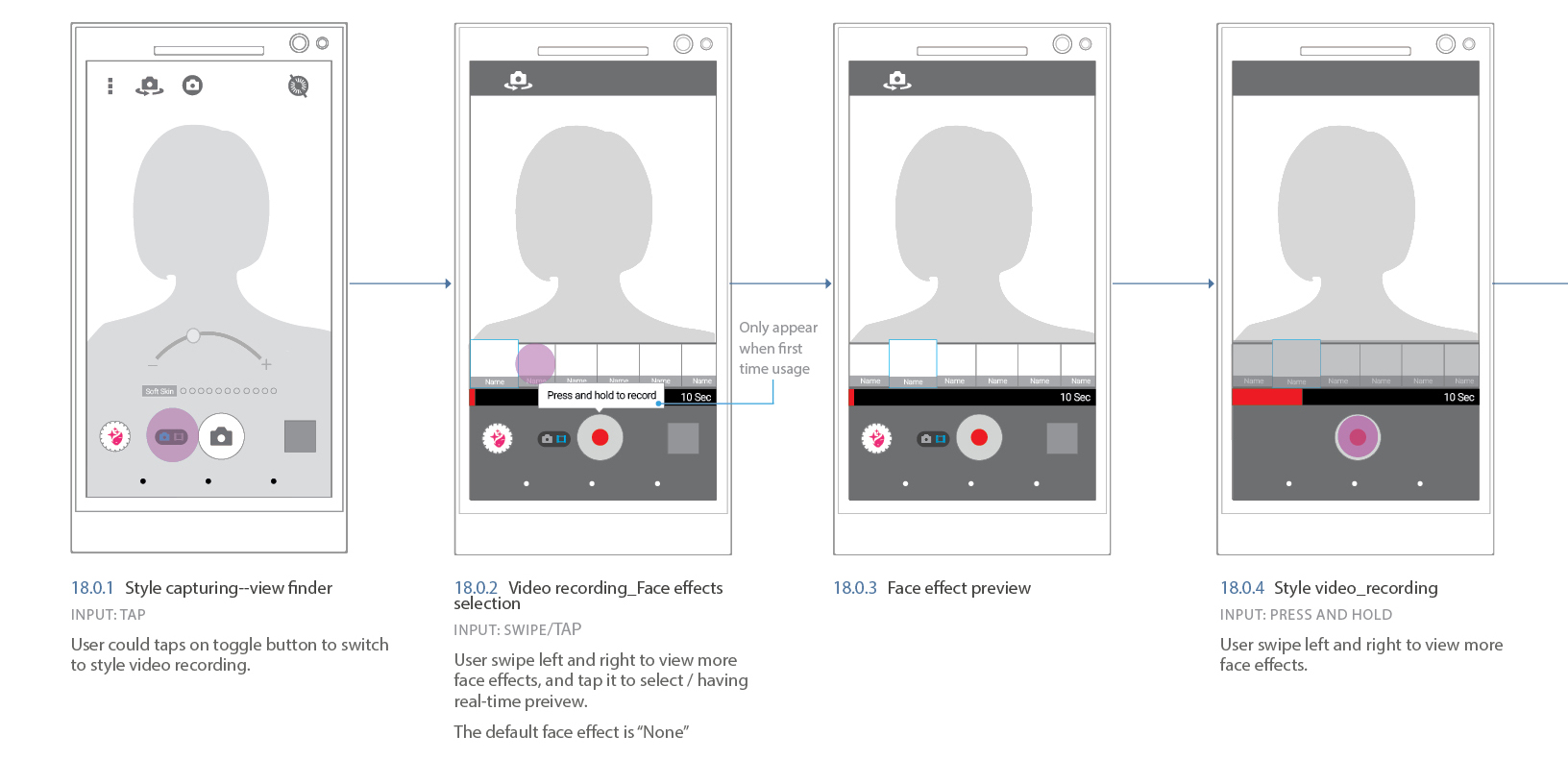
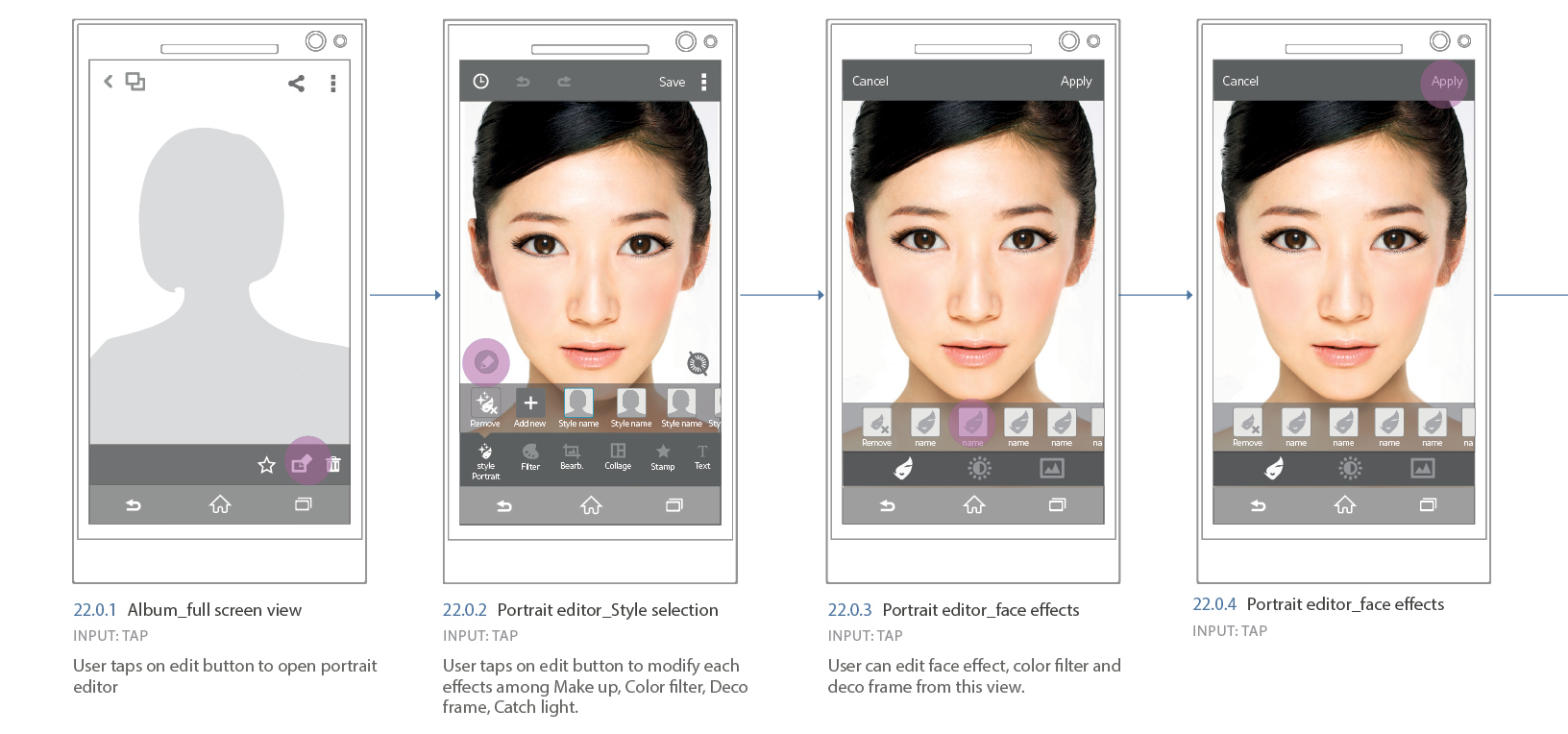
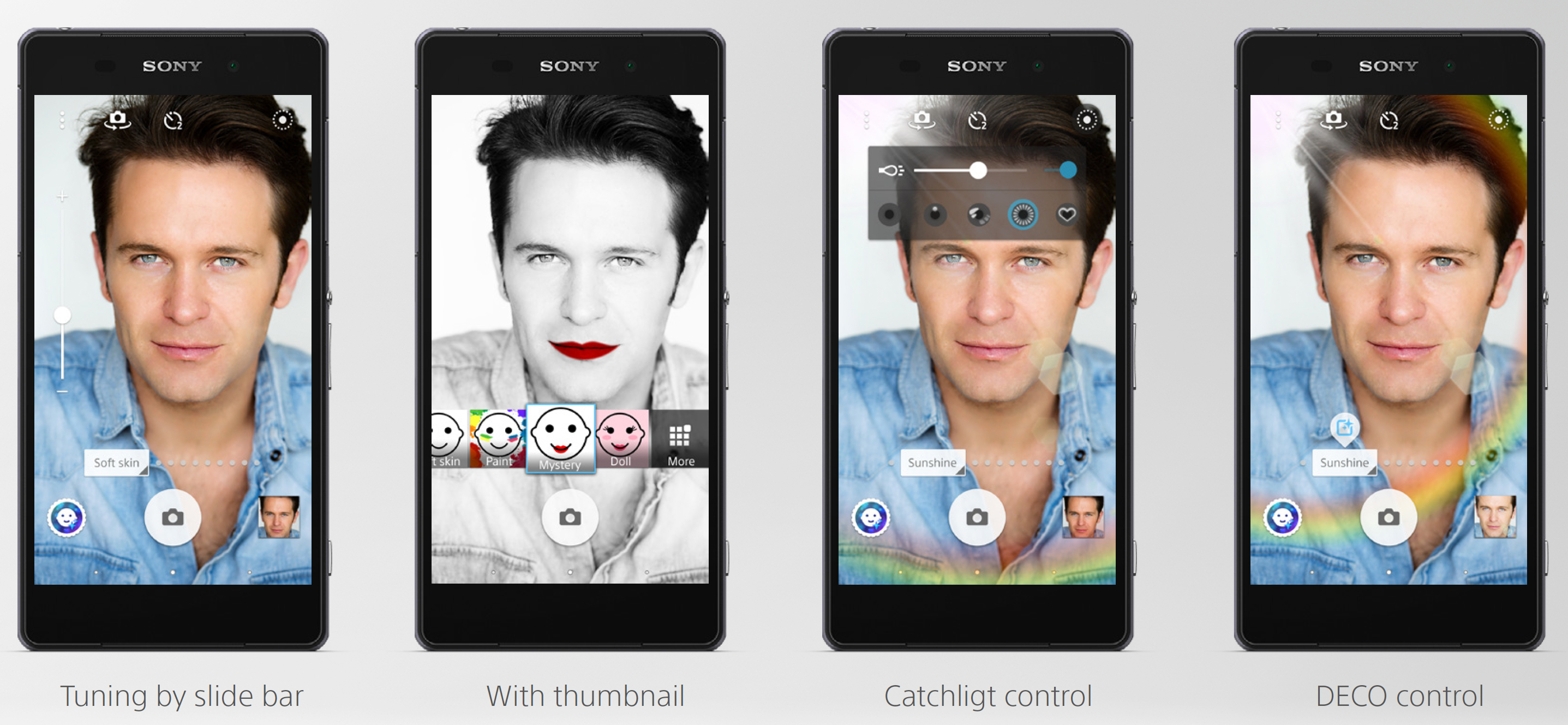
The complete design deliverables include wireframes that outline the overall concept and the interaction for style portrait capturing and video recording in Camera, and for photo editing with styles in Photo Editor; visual design; and style content design — which form the architecture, appearance, and content respectively.
My contribution was providing the product experience direction and the design direction, and overseeing the user experience value delivered through both the app design and the content ecosystem design.
Research & Ideation
Consumer Trend Study
I led the team through extensive research and card sorting sessions to identify which types of content people most enjoy sharing on social media, and to analyze the dominant themes. While sharing preferences vary across demographics and cultures, we found several themes consistently popular across groups: pets, selfies, family & friends, travel, food, and shopping.

Ideation
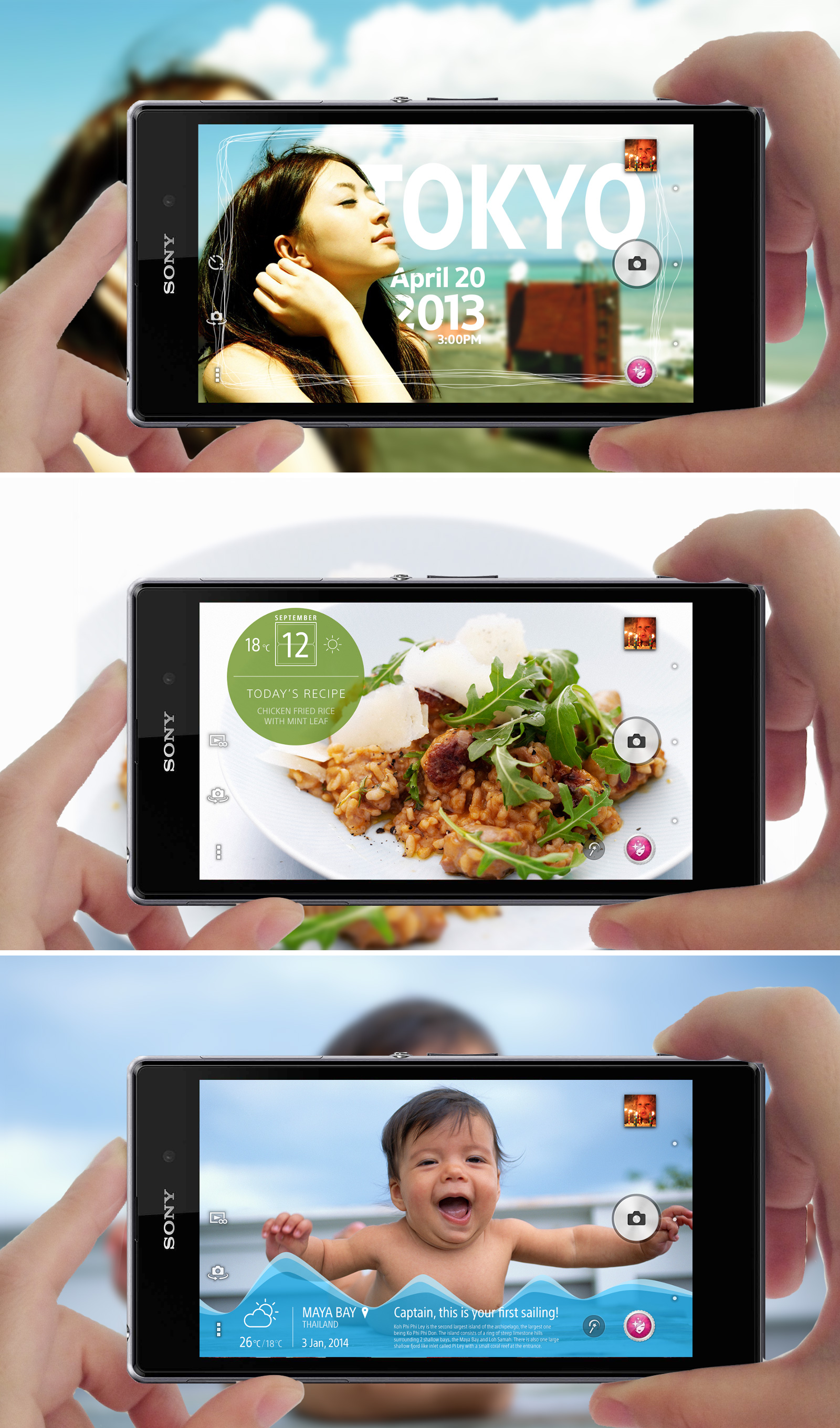
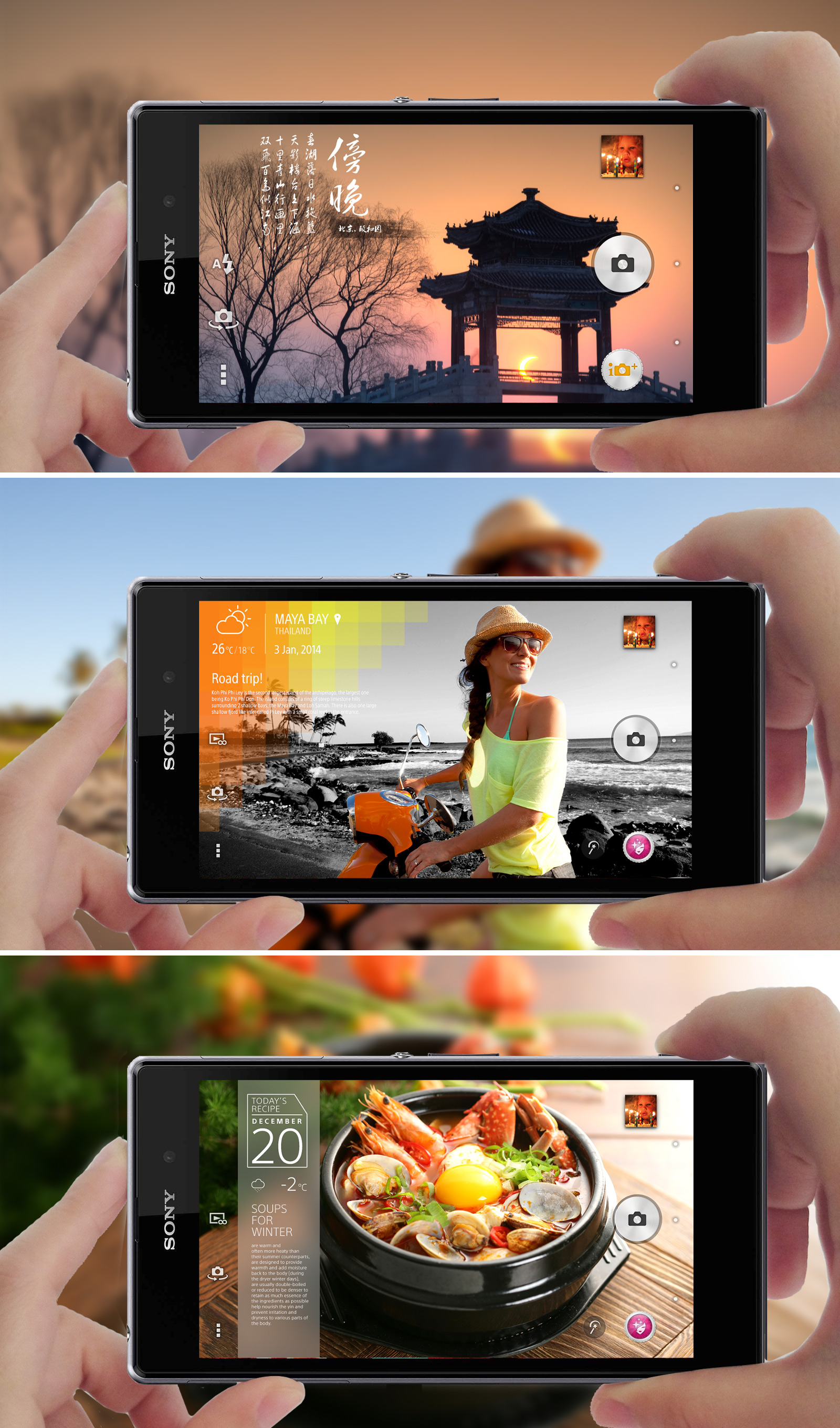
Inspired by editorial design, my team created conceptual sketches to explore what the experience could look like — experimenting across several directions:
Changing typography styles automatically based on scene or theme detection.
Changing decorations, filters, and effects based on color scheme, objects, contrast, and temperature.
Playing with editorial layouts and foreground/background layer parallax effects.
Feasibility Study
After multiple rounds of feasibility studies with internal and external technology teams, we converged on a focused direction:
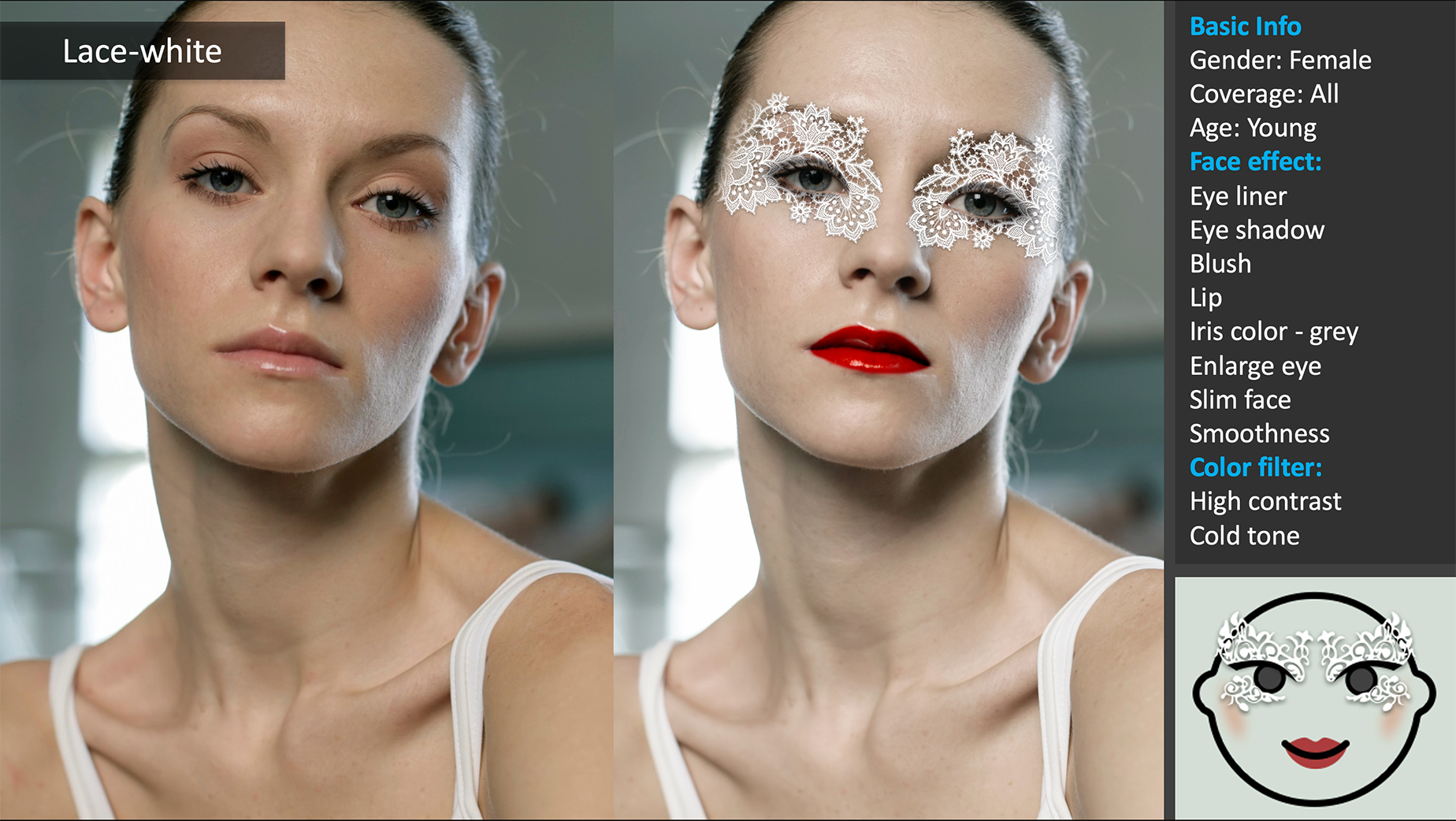
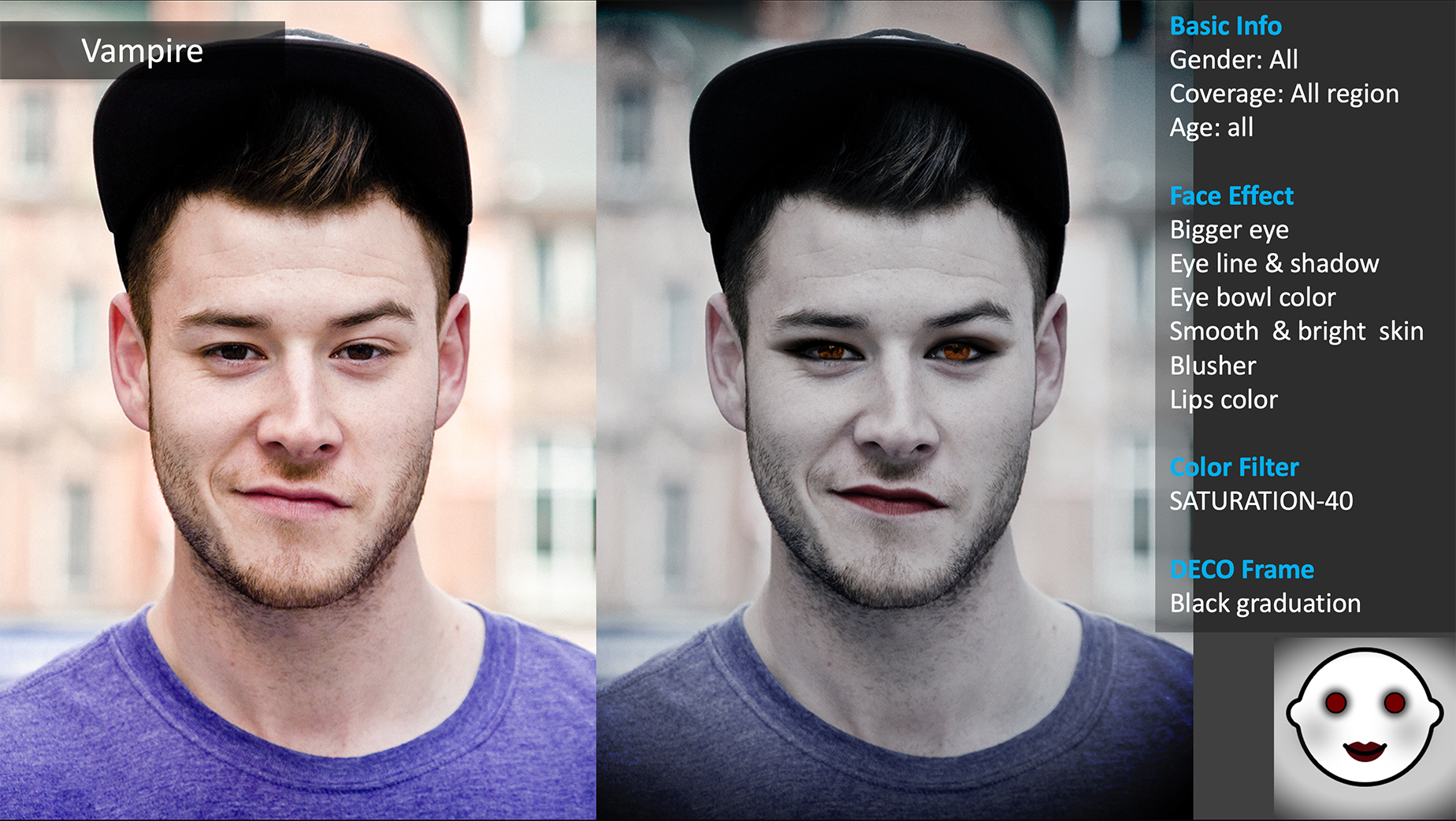
My core direction when guiding the team: the key value isn't to position this as a portrait retouch app. It's to free people's imagination — to let users see different possibilities in themselves.
Wireframe
After I approved the direction, my team started working on the detailed concept. The overall idea was to introduce styles in both Portrait mode and Video recording mode under Camera, and to let users apply styles to regular photos in Album.
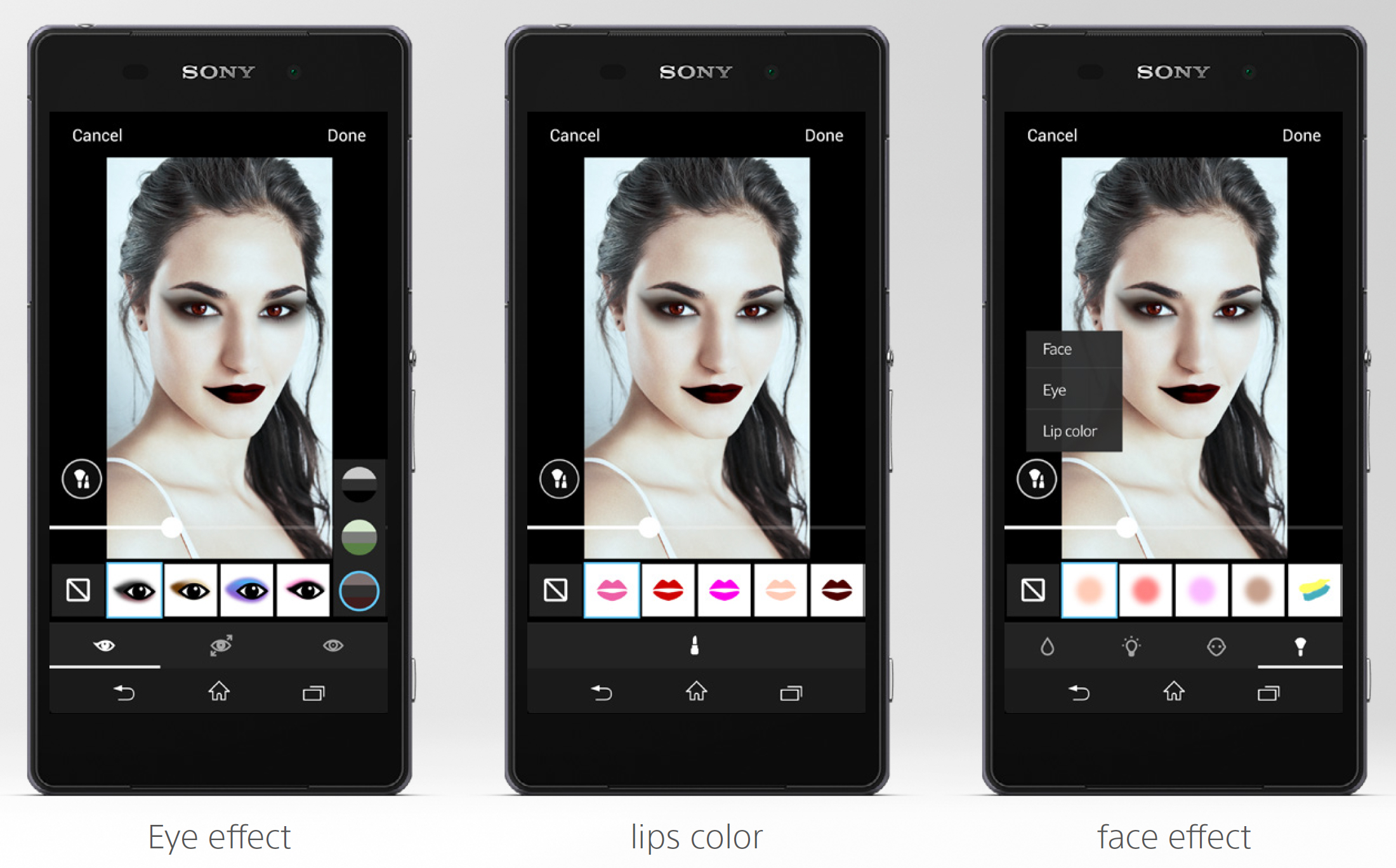
On top of applying styles, we also envisioned letting users download and create new styles.
Following these use cases, the team created the high-level wireframes.
#1 — Style Portrait Capturing
#2 — Style Video Recording
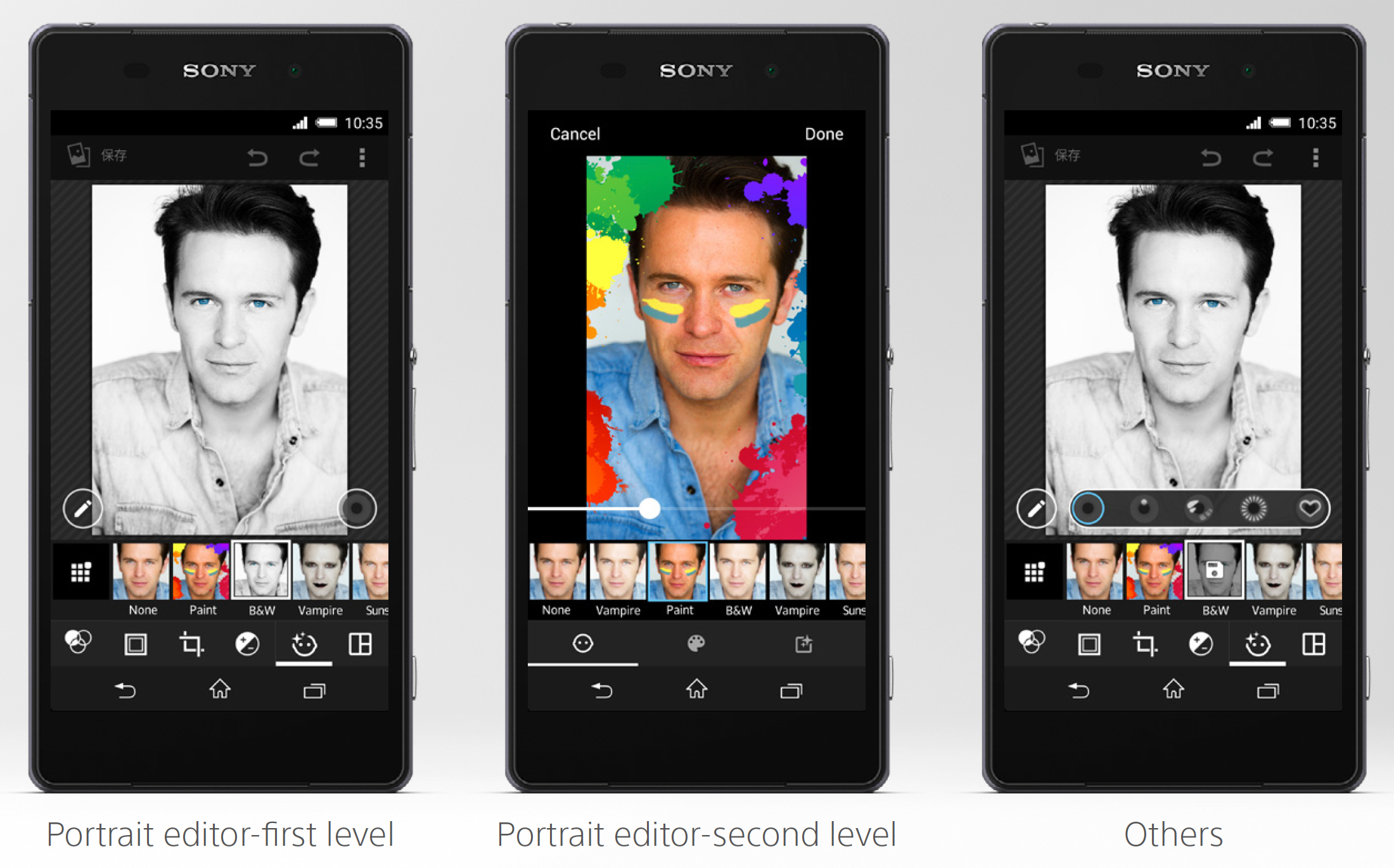
#3 — Portrait Editor
Final Mocks
#1 — Style Portrait Capturing
#2 — Portrait Editor
#3 — Portrait Creation
Content Design
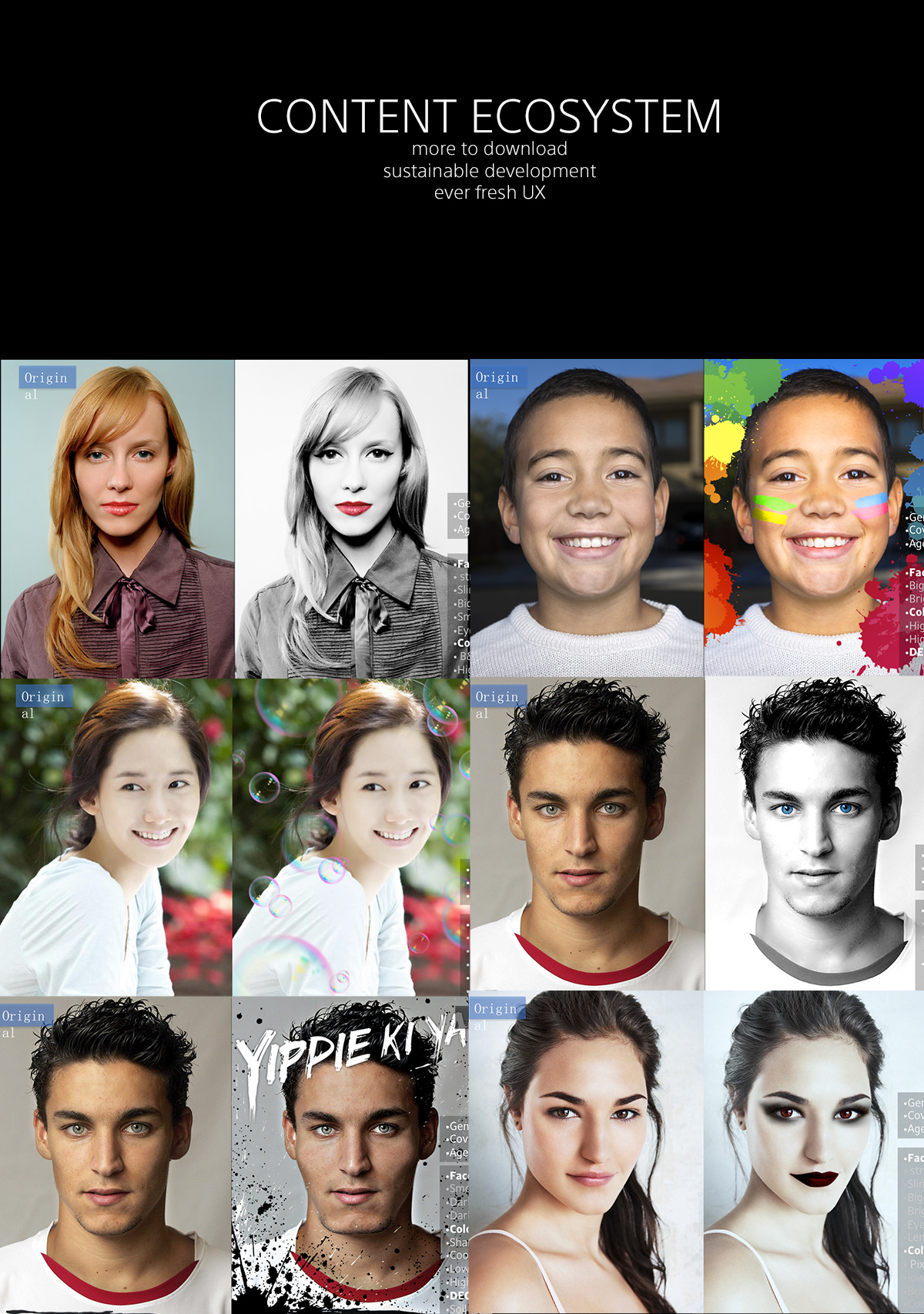
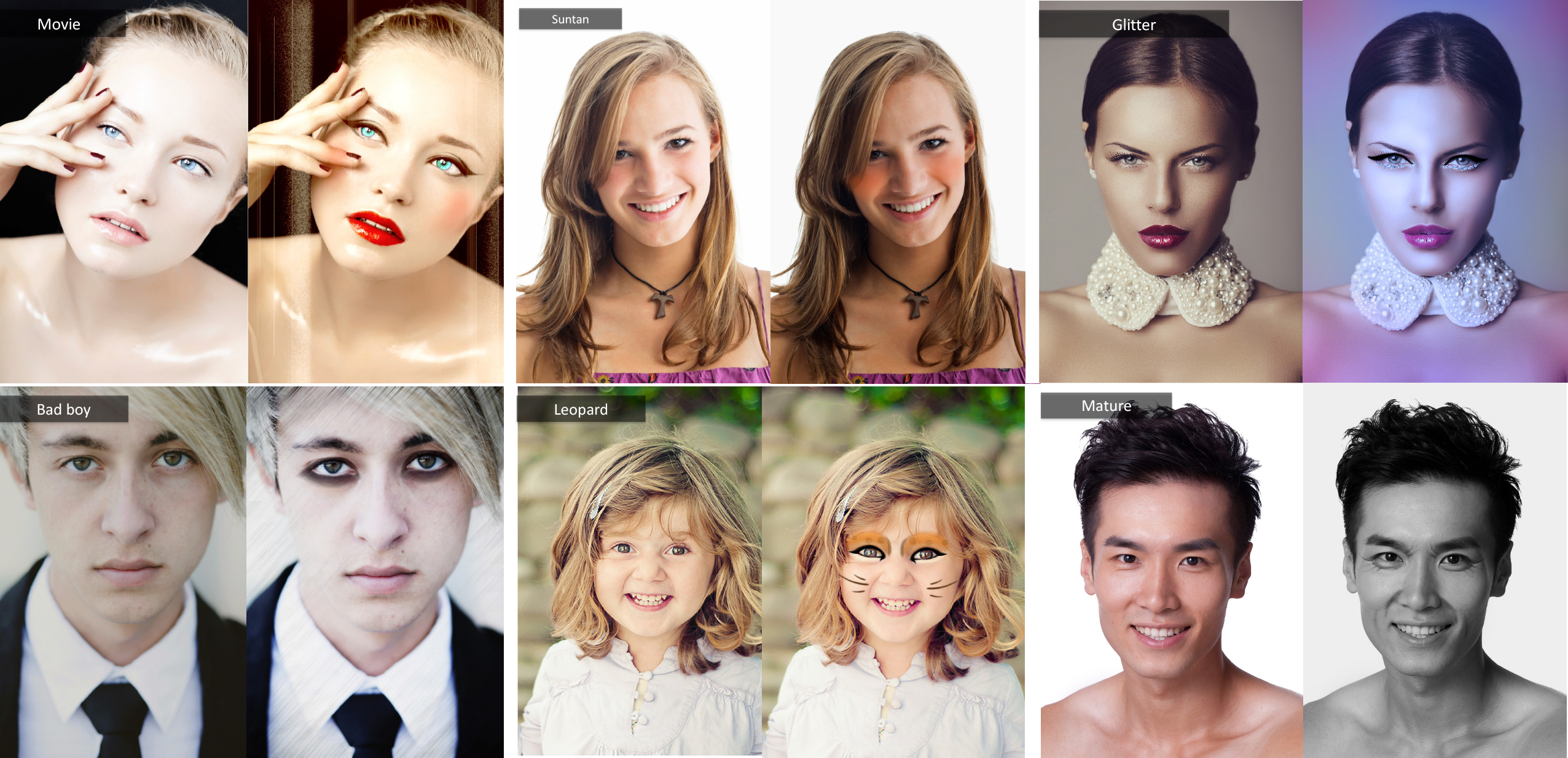
My team spent tremendous effort exploring and designing style themes. Our target was the global market, but earlier studies had indicated that each culture has different styling preferences. Based on the recommendations from the designers and the product owner, I agreed with the team to create both a global set and a local set, since the first release would launch in APAC.
I also advised the designers to balance gender, age, and scenes, so that we could meet the needs of the majority of user groups. Most importantly, I still wanted to see elegant design and creativity reflected in the styles.
An interesting approach we took was experimenting with makeup stylists when creating the styles — they gave us great insights into global and local styling trends.
Meanwhile, we worked with the Development team to build an open API so that content creation could be supported by external designers and developers.
Business Impact
The app shipped preinstalled and turned out to be a strong success in the market, positioned as a key selling point for the device model Sony launched that year.
The open API extended that beyond a single release. By letting external designers and developers contribute styles, the app moved from a feature that ships once to a content ecosystem that keeps growing — and gives users a reason to come back long after the device is bought.