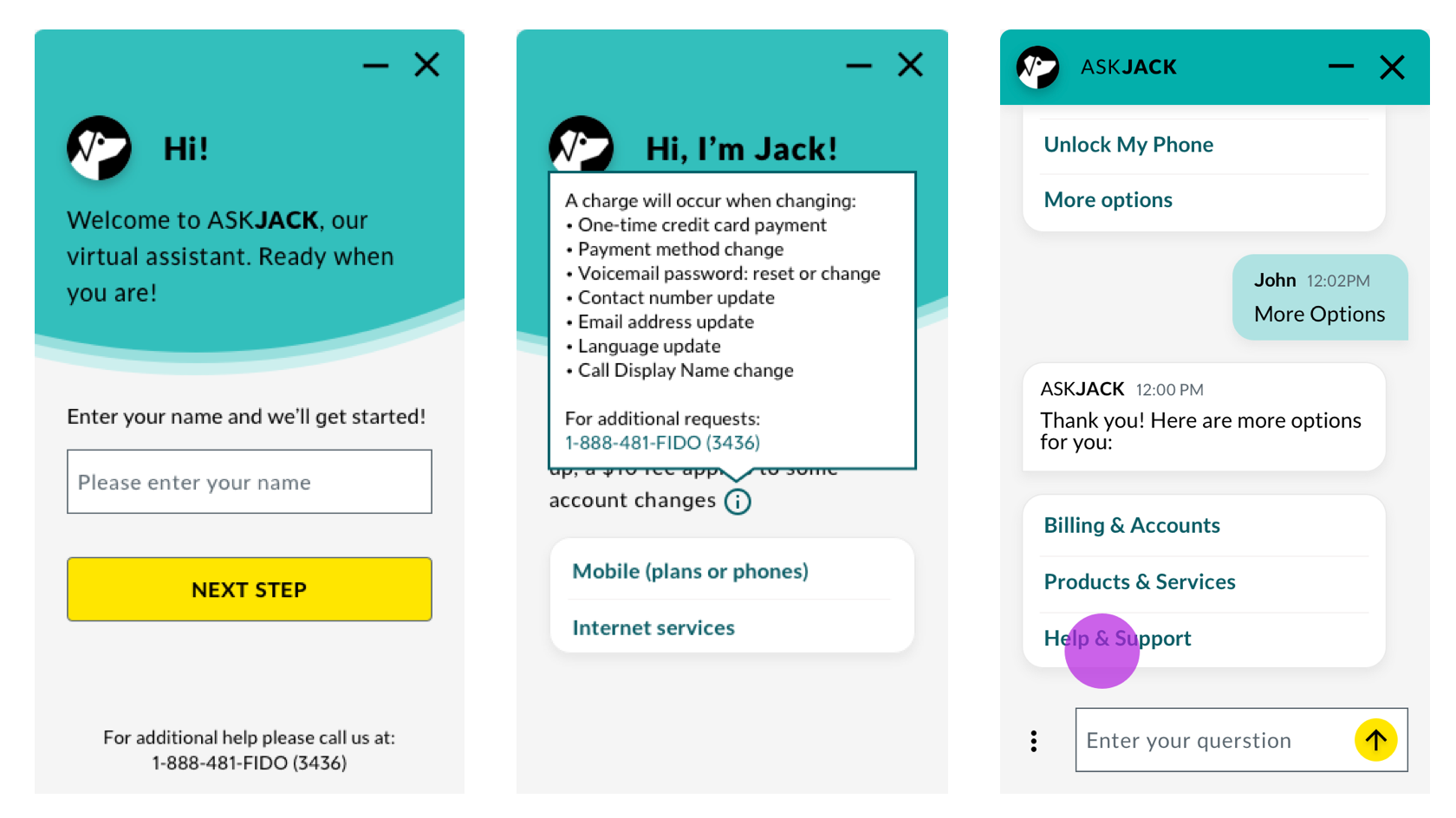
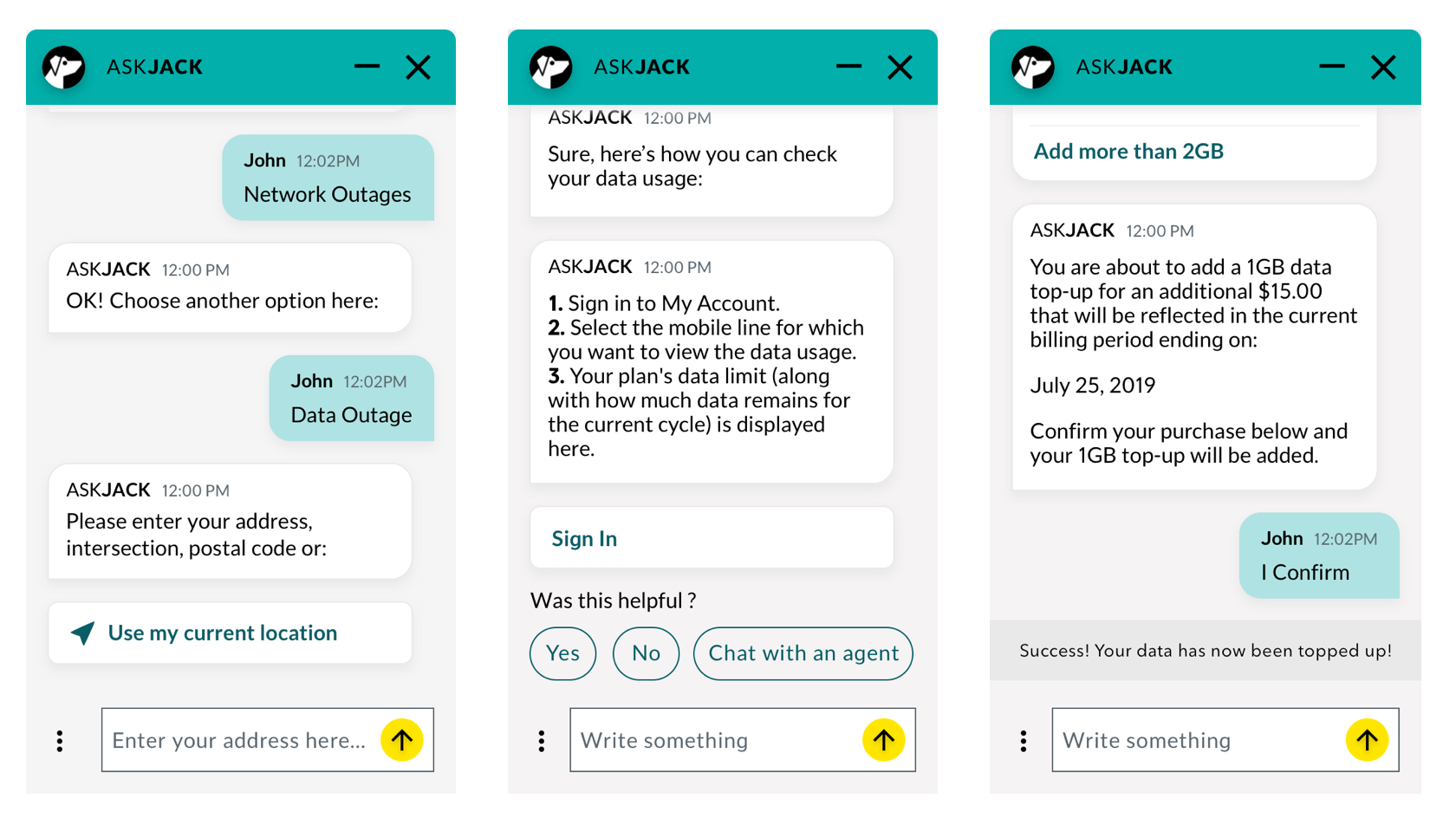
Problem Space — Best-in-Class Virtual Assistant
As part of the OMNI-Channel service strategy — alongside the corporate website, the customer self-serve portal, and the Rep-oriented sales platform — the Virtual Assistant presented a new problem space.
This was a brand-new build starting in 2019 and spanning several years, covering early MVP scope design, research, interaction pattern building, content strategy, feature development, and product branding.
Our goal was to build a brand-new channel in the form of a Virtual Assistant — one that can serve customers independently, and exchange information with every other channel so the omni-channel vision holds end to end. Success was measured on lower live agent escalation, higher chat deflection rate, and improved customer satisfaction.
Project Outcome
I led the end-to-end design journey — from initial scoping and interaction pattern definition, through product positioning, intent decision trees, content modeling, wireframing, and final mocks.
Through my design leadership, the Virtual Assistant grew into a product with an established experience framework, a cohesive design pattern system, a well-received visual style, and most importantly a solid UX foundation for sustainable feature development.
Research
Online Study
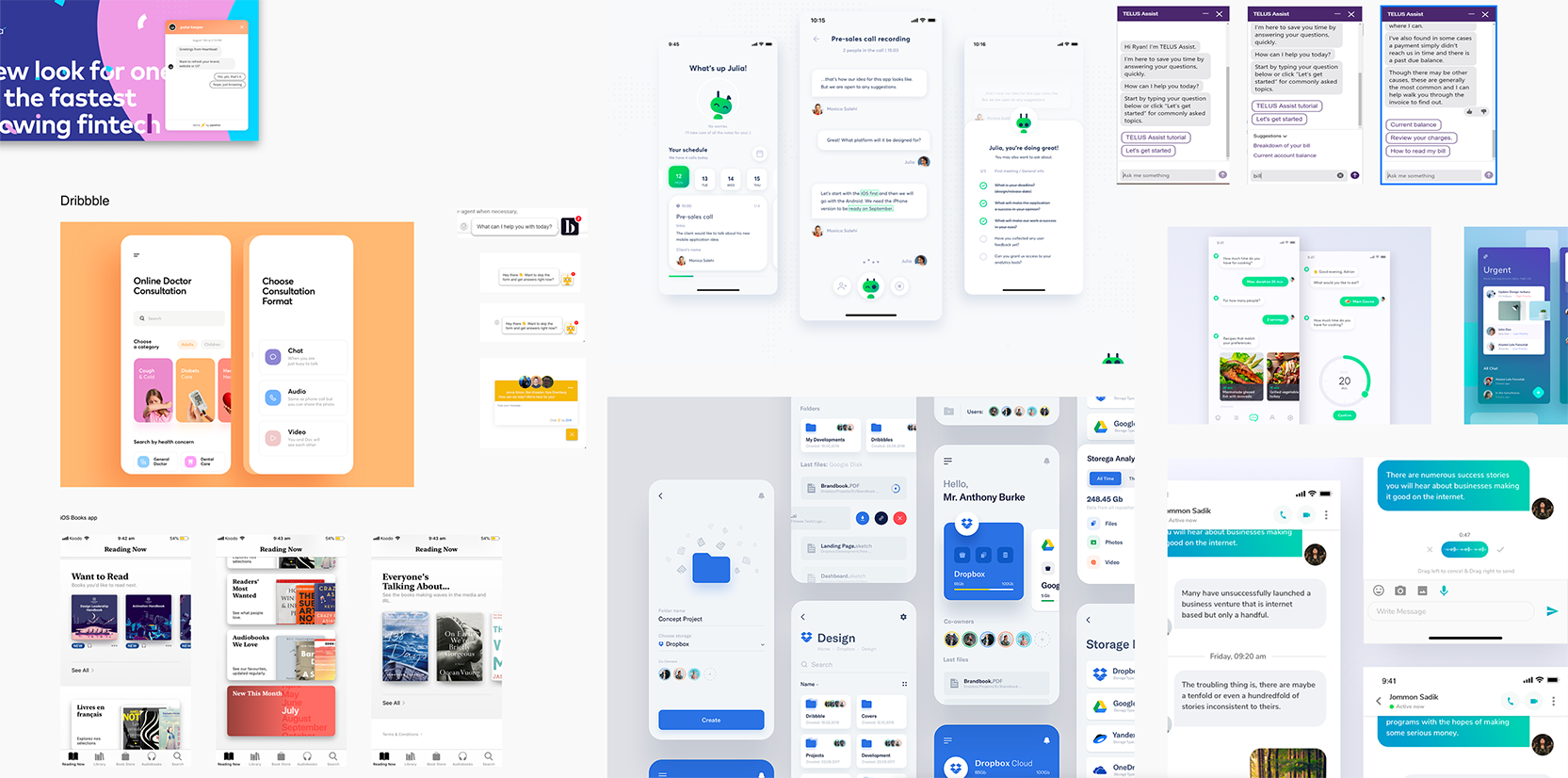
To start from a wide view of what the market offered, I partnered with the Product team to study AI chatbot applications in the telecom industry and map the range of serviceability levels across different assistant types.

For the experience design exploration, my team and I studied dozens of conversational UI and online assistant designs to understand how to translate natural language interaction into a coherent digital form.
Experience Metrics
Beyond standard UX criteria, I advised the team to align with the product metrics defined by the Product team — giving everyone a shared, measurable target:
Helpfulness Rate — customer-rated helpfulness score on individual resolutions from the Virtual Assistant.
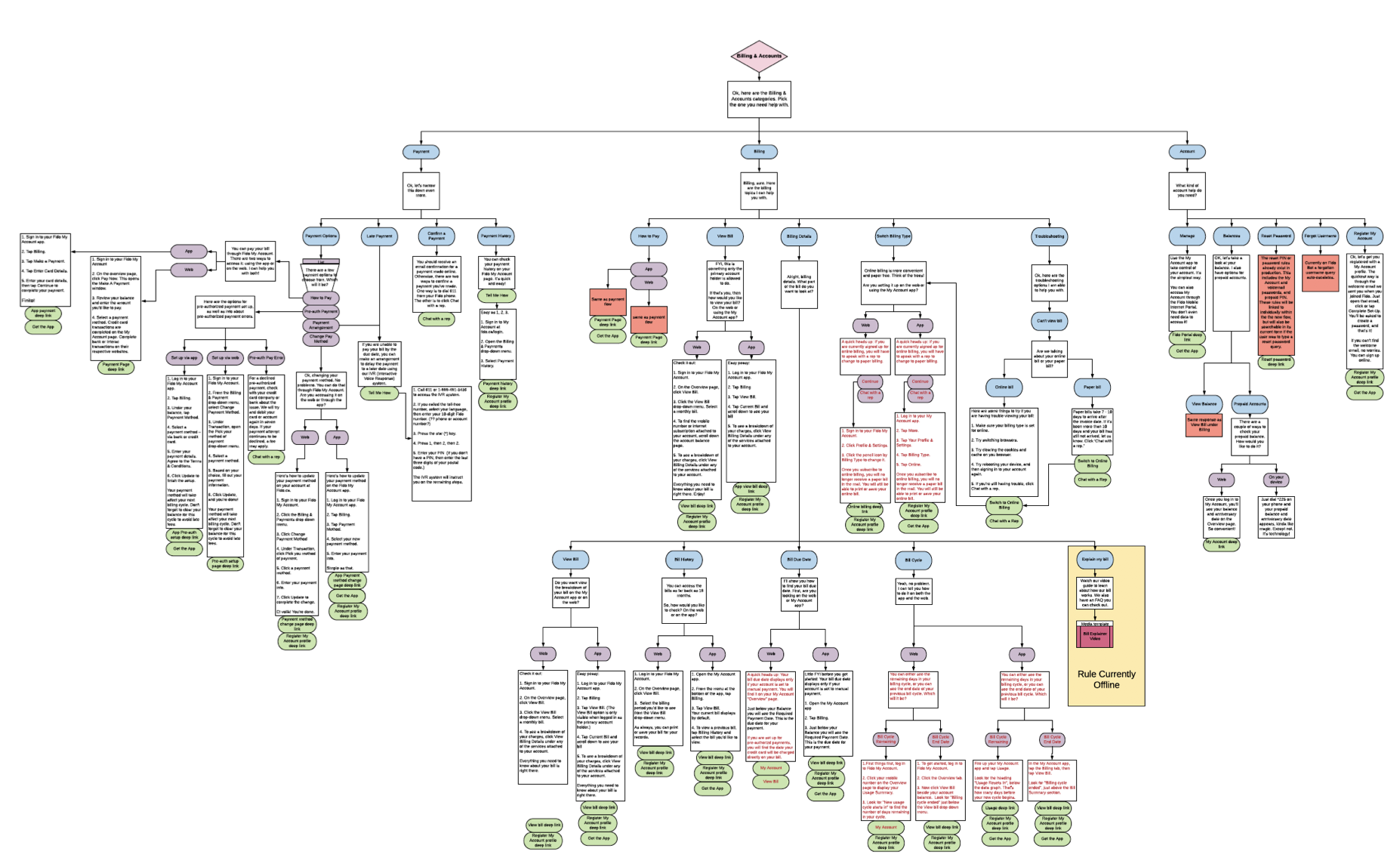
Intent-based Micro Journey Mapping
The core design activity for conversational UX is mapping intent-based micro journeys — not the cross-timeline journeys we typically focus on, but the discrete journey for each supported intent, from the moment a customer is greeted to the moment that specific intent is resolved. Each micro journey required the team to factor in:
Ideal customer experience — the fewest steps to resolution.
Conversation depth and efficiency — balance between thoroughness and brevity.
Journey framework from the vendor — constraints and conventions to work within.
Interaction Pattern
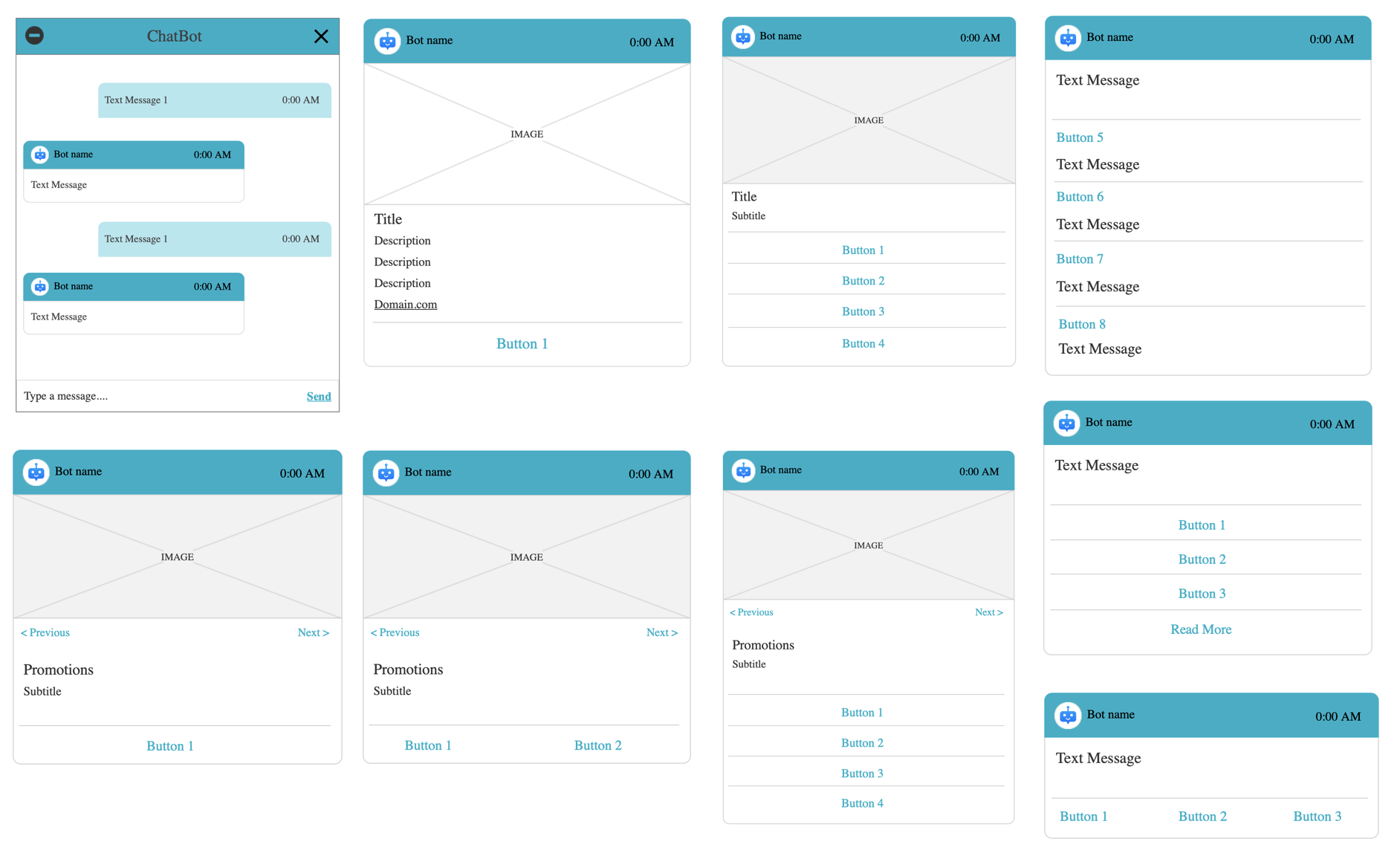
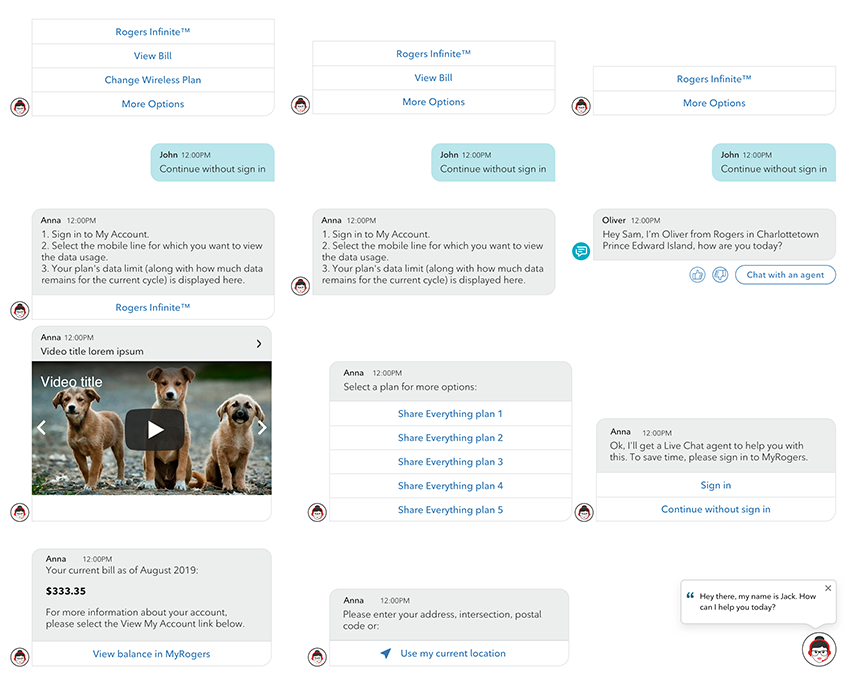
The interaction between a customer and the chatbot requires a pattern library covering customer inquiry, informational content, interactive content, multimedia content, transactional instructions, and system notifications.
We started with a generic low-fidelity framework to validate universal patterns across the first 20+ intent journeys, then produced a high-fidelity pattern set in detailed contexts. Settling them at low fidelity meant every intent added later inherited the patterns instead of renegotiating them.
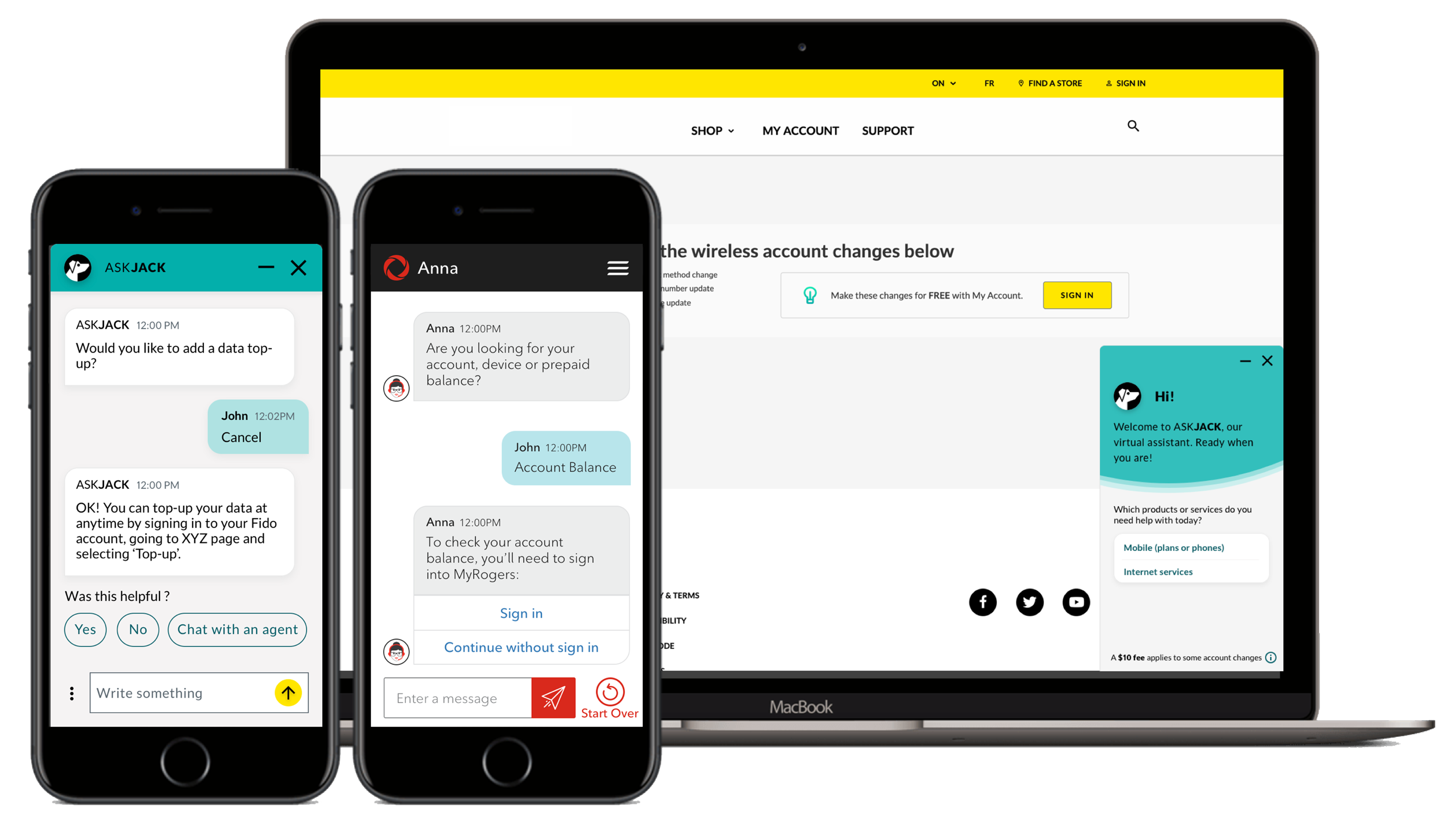
Final Mocks
Brand A
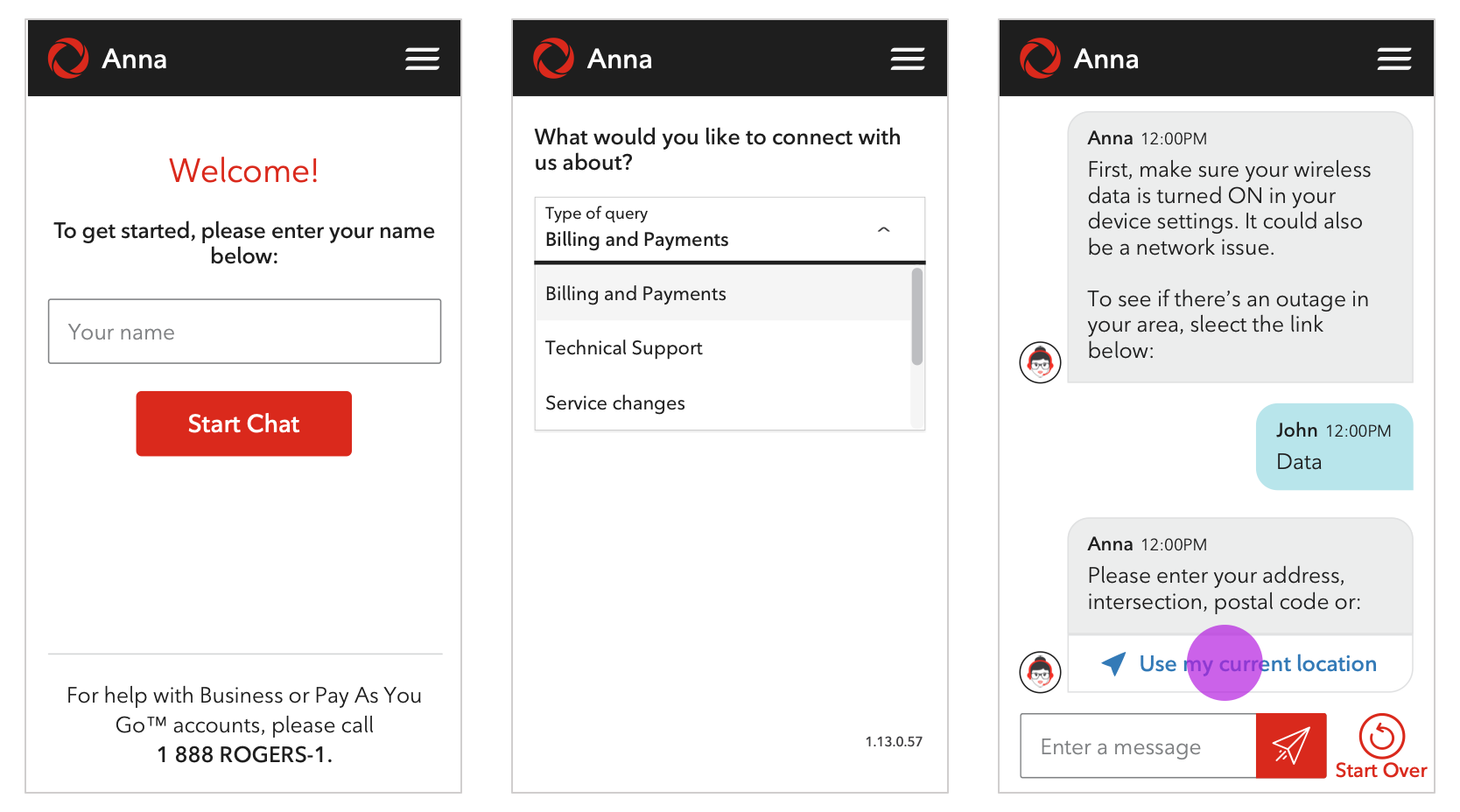
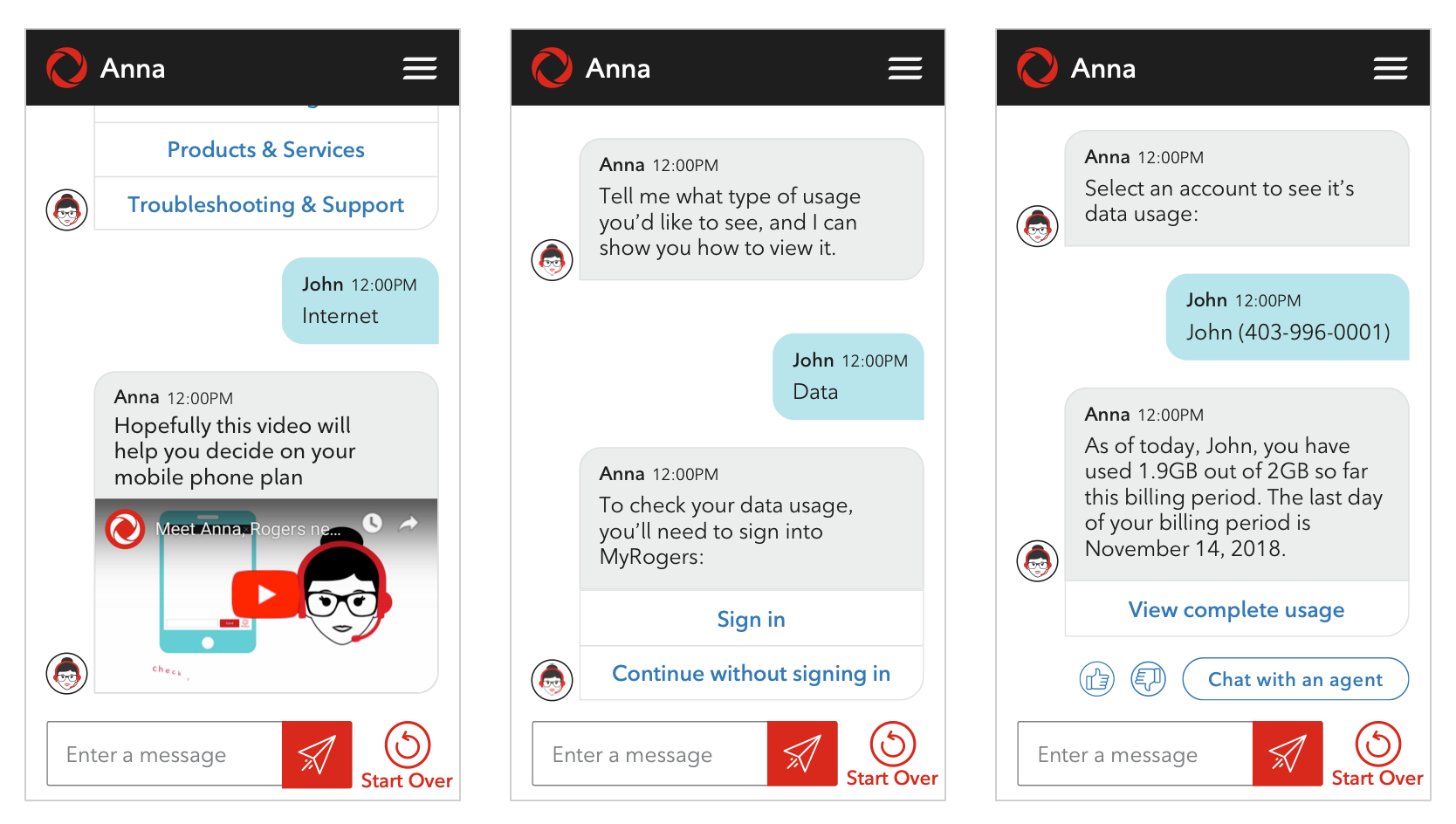
Brand B